


Why are romcoms feminist icons? (a somewhat brief history of the romcom)
- Brooke D
- Mar 31, 2023
- 6 min read

Hello everyone! Today I did two things: I created a reel to give some romance movie recommendations based on your favorite taylor swift album (woohoo for the era's tour!) and second, I figured I would break down the timeline of the romantic comedy because of its recent resurgence in the last few years.

Romantic comedies began centuries ago with William Shakespeare. His play, The Merchant of Venice focused on romantic pairings to tell the story with plenty of wit and comedy of errors to help the story along. Much Ado About Nothing and A Midsummer Night's Dream are also examples of Shakespearean romantic comedies.
Screwballs - 20s/30s

Early versions of romantic comedy existed in the 20s and 30s, but really, the next most prominent evolution of the genre began in the 30s and 40s with the Screwball comedy. During the era of black-and-white film and newly-invented films with sound, the screwball comedy took shape. Films like Bringing Up Baby or A Philadelphia Story. Stars like Cary Grant and Katherine Hepburn played the fast-talking, quick-witted characters that brought these films success. One of the impacts of these films is their central focus on a female-led story. A woman was allowed to be the hero and to drive the story along.
Sex Comedy - 50s-70s

From the 50s to the 70s, innocent screwballs became sex comedies. These were typically battle-of-the-sex films. Films like Lover Come Back, Pillow Talk, or any number of Doris Day films fall into this category. Spencer Tracy and Katherine Hepburn also led several films in this genre as well. These films were allowed to push the boundaries more, and even furthered female agency. According to Shanna Yehlen, a writer for Glamour, during this time, Alfred Kinsey's research on men's and women's sex lives along with the loosening of the film industry's moral code helped create the perfect atmosphere for these films. Women were acknowledged as having similar desires to men and film reflected that.
Coming of Age - 70s/80s

Before getting to the traditional romantic comedies we know today, the 70s saw a radical jump from sex comedy to rather a focus on self-fulfillment. Both Emma C. C. from THe Review Geek and Yehlen cite Annie Hall as being a good example of the personal motivations of the female character. This was also a very cynical time in which people began questioning the idea of love and if it actually existed.

John Hugh's films in the 80s were an interesting blend of coming-of-age films infused with romantic drama, films like Sixteen Candles and Pretty in Pink focused on the female main character, and I would argue is closer in genre to Annie Hall than it is to traditional romance. Although that might be my own inability to stomach the racism and sexual assault played for laughs to actually see the romance in these films.
Neotraditional - 90s

The neo-traditional romantic comedies are the ones we think of today and began in the 90s. Films like Sleepless in Seattle and You've Got Mail, both Tom Hanks and Meg Ryan joints, focused on compatibility and communication rather than physical attraction. In fact, in both these films, the characters spend the majority of their time separately. Other romance movies from this era were films like Clueless or Sabrina. These films also referenced past films as well, of the films mentioned, they all call back to predecessors of the genre. Sleepless in Seattle discusses An Affair to Remember, a film from 1957 that was less of a comedy but still had the charm and wit of Cary Grant and Deborah Kerr. You've Got Mail, while a staunchly 90s film, was actually a remake of the film Shop Around the Corner from 1940 which was a sex comedy (and You've Got Mail has a similar feel to that genre) as well as another remake of that film from 1949 with Judy Garland, In the Good Old Summertime, which was a musical remake but very similar to the original black and white with Jimmy Stewart. Sabrina is a remake of an Audrey Hepburn film from the 50s and Clueless is a modernization of Emma, written by Jane Austen nearly two centuries before.
The genre of neo-traditional romantic comedies spent time both updating older stories for a modern audience, but also creating relationships based on the personalities of the two leads. These films usually had some version of two very different people who start off not liking one another, but over time, they get to know one another and fall in love. During this time, films like Pretty Women (1990) and Sleepless in Seattle (1993) grossed millions of dollars.

Eventually, the golden age of romantic comedies loses its power and a steep drop in demand for these films takes place in the early 2000s. While romantic comedies in the early 2000s seem to have some of the highest-grossed profits, the decline in quality and the lack of these films between the mid-2000s till mid the 2010s shows that while people went to see these early films, they didn't like them enough to want more.

According to Amanda Urena from the Fordham Observer, "the gender politics, heteronormativity and general whiteness of the rom-com no longer reflected the evolving attitudes and demographics of target audiences." The romcom outlived it's stay. While it had once been ahead of it's time in promoting female-centric stories, then female desire, and so on, American culture rapidly progressed far beyond what the genre could keep up with. There were still some great romcoms that came from the 2000s, like How to Lose a Guy in 10 Days and 13 Going on 30, but a lot of romance films flopped during this era as well and are hardly remembered as opposed to films like the ones mentioned from the 90s.
Modern Romantic Comedies (late 2010s-present)

It wasn't until movie producers and writers caught up with what audiences wanted to see that the romcom genre made a comeback. In 2018, both To All the Boys I've Loved Before and Crazy Rich Asians debuted. One on streaming and one in theaters. These films arguably began a new era of romantic comedies. They portrayed Asian-led stars and while To All the Boys, while modern, had a similar 90s plotline with a focus on compatibility, Crazy Rich Asians focused the story on family and wealth rather than on the start of the couple's romance.

Since then, To All the Boys gave Netflix the boost it needed to fund more romantic comedies. Though not quite as good, it allowed for a diverse set of people to be allowed to find love. Subsequent films like Dumplin' or Always be My Maybe are good examples of diversity. Films like Tall Girl, After, or The Kissing Booth all saw moderate fame as well. if only because of the cringe levels.
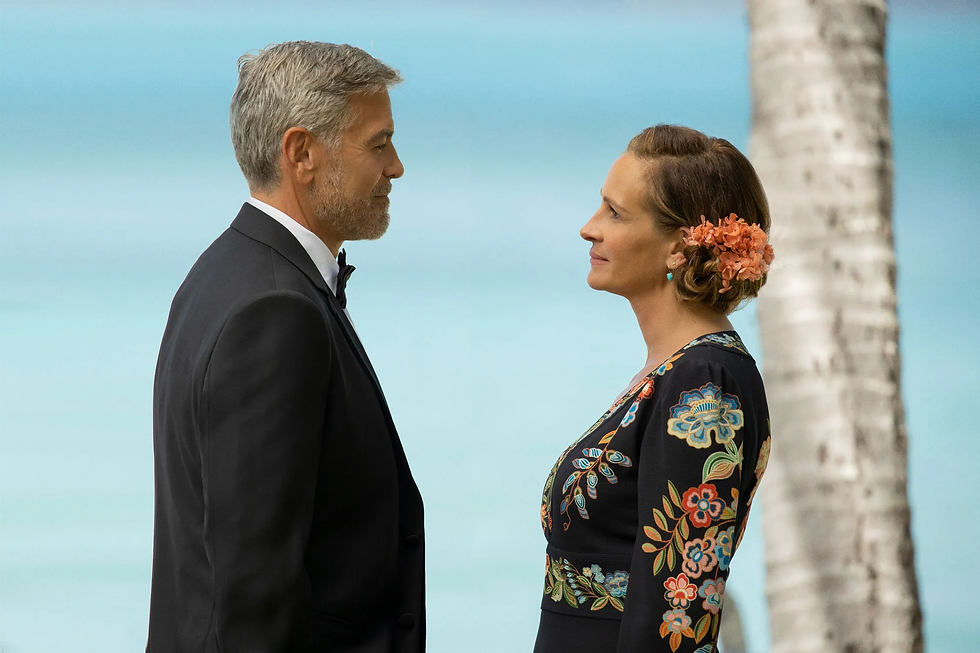
Since the romcom's move to streaming as well as the Pandemic, it has been much harder for stars to get people into theaters to watch these films. While streaming is occupied mostly by teen romance, it seems that a subgenre has slowly risen up. Stars from past romantic comedies are taking the foreground and telling romantic stories of women much older than the traditional romcom. Films like Ticket to Paradise starring George Clooney and Julia Roberts, The Lost City with Sandra Bullock and Channing Tatum, Marry Me with Jennifer Lopez and Owen Wilson, and the most recent Your Place or Mine with Reese Witherspoon and Ashton Kutcher all seem to be trying to bank on the names of their stars but are very touchy when it comes to actually advancing the genre.

The one thing I love about these films aside from seeing some of my favorites on the big screen, is that they are actively making a place for older women in Hollywood. Unlike men, once womenen reach a certain age in Hollywood, they're given the mother role. They are no longer (up until present) seen as women seeking love or companionship.
Ultimately, whether you love or hate (or love to hate) these films, they have a long (and arguably important) history. In the future, I hope this continues to open doors for small actors who are older. However, aside from that, these films follow very similar cliches of past romcoms and if you're someone who doesn't find comfort or joy in those predetermined tropes, you probably won't find anything exciting about these films. Furthermore, they seem to be staying on streaming for the time being, the lack of response to the ones that have been released in theaters has most likely solidified their platform which is disheartening because I do believe that films with a romantic central plot have clearly been a staple to both literature and film. Hopefully in the future, these romcoms find a way to continue evolving and make their way back into the mainstream conversation.
Resources:
C., Emma C. “A Brief History of the Romcom - How Romantic Comedies Have Evolved over Time.” The Review Geek, 30 June 2022, https://www.thereviewgeek.com/history-of-romcoms/.
“Romantic Comedy.” Box Office Mojo, https://www.boxofficemojo.com/genre/ sg2111762689/?sort=grossToDate&ref_=bo_ge__resort#table.
Urena, Amanda. “The Evolution of the Romantic Comedy.” The Observer, https://fordhamobserver.com/37930/recent/arts-and-culture/the-evolution-of-the-romantic-comedy/#:~:text=The%20traditional%20rom%2Dcom%20structure,be%20the% 20objects%20of%20desire.
Yehlen, Shanna. “A Brief History of Romantic Comedies.” Glamour, Glamour, 14 Feb. 2016, https://www.glamour.com/story/a-brief-history-of-romantic-co.


Comments